Tip #13: Avoid Alcohol, Tobacco and Caffeine
- How to Wake Up Early
- Tips , Sleep
- January 21, 2026
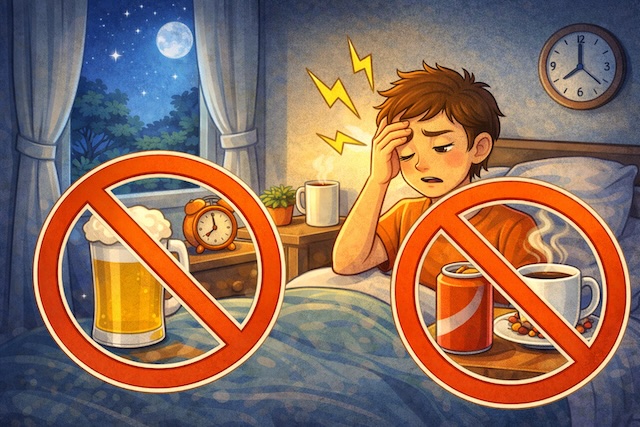
Many people these days try to reduce or manage stress with the use of stimulants which can be found in abundance in most foods and drinks we consume. While a cup of coffee in the morning may have a positive effect on your energy level and mental abilities, it can also cause insomnia and sleep deprivation.
Why Stimulants Hurt Your Sleep
You should avoid alcohol, nicotine (smoking tobacco) and caffeine as much as possible because these stimulants have an alerting effect—they disrupt sleep and prevent your body from effective relaxation.
Caffeine means not just coffee but can also be found in:
- Many teas
- Cola and soda drinks
- Chocolate
- Energy drinks
If you can’t avoid some of these stimulants completely, then at least try to avoid them in the evening within 4-6 hours of bedtime.
The Alcohol Myth
Most people think that moderate consumption of alcohol has a calming effect on your organism. It indeed may speed up the beginning of sleep, but your sleep will not be as restful. You may end up ruining your next morning if you wake up feeling dizzy.
Don’t drink and you will be more likely to wake up refreshed in the morning.
Find Your Sleeping Enemies
It should be noted that the effect of these stimulants is very individual. The best way to find out who your “sleeping enemies” are is just to try avoiding these foods and drinks for some time and see if your sleeping improves.
Simple logic says that the more effective your sleep is, the less time you need to sleep and completely “recharge” your organism—and the earlier you can get up. For similar reasons, you should also avoid eating heavy meals before bedtime and be cautious about sleeping pills.
Recommended Reading
- The Hidden Cost of Caffeine on Sleep Quality — Stanford University
- The Unexpected Impact of Caffeine and Alcohol on Sleep — Sleep Foundation
- How Do Alcohol and Caffeine Affect Sleep? — Medical News Today