Tip #19: Why Alarm Clocks Can Be Bad and How To Use Them the Right Way
- How to Wake Up Early
- Tips , Sleep
- January 31, 2026
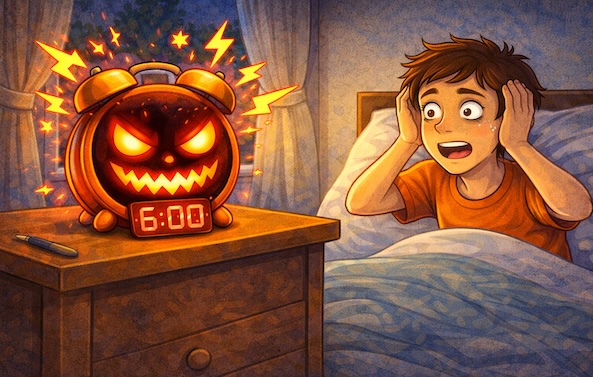
We continue our quest to find the best ways on how to wake yourself up early in the morning and do it consistently. If you search the web for “how to wake up early” or “alarm clocks” you will definitely find Vincent Cheung’s article “Alarm clocks are bad. How to wake up and feel better.” This article has got almost 3,000 diggs and a number of links for a reason – it includes a trick on how to wake up early that Vincent has successfully used for years and now shares with his readers.
To better understand how this trick works and why it works, I recommend you first check one of my other posts on how sleep works.
How Sleep Stages Affect Your Wake Up
In short, there are 5 stages of sleep – drowsy sleep, light sleep, two stages of deep sleep and REM sleep. You cycle through these stages 4-5 times during the night. Each stage has its purpose wisely put there by our Mother Nature, and each stage is important for effective, relaxing sleep.
What’s more important is at what stage you wake up. If you are awakened by an alarm clock, it can happen at any stage, but there is a tremendous difference if you wake up from deep sleep or light/drowsy sleep.
Waking up from deep sleep is extremely difficult and painful. This is when an alarm clock can be really bad for you. If you ever had to wake up very early, like at 3am, then you understand what I mean. You feel drowsy, you can’t make up your mind and your body doesn’t seem to obey you.
Waking up from drowsy or light sleep is fast and easy. You just open your eyes, stretch your body, stand up and get to your morning routine, feeling well rested and fully energized.
The Dual Alarm Clock Trick
And this is where Vincent’s trick comes into play. The goal of this trick is to make you wake up at drowsy or light sleep stages. To use the trick, you need either two alarm clocks or a dual alarm clock. Here is how Vincent explains it:
I use a very simple system that can be done by even the most frugal of people. I can’t remember when I first started doing this, but it’s been at least 7 years. Here’s what you do:
Set an alarm to go off before the latest time you want to wake up. Make the alarm really quiet – radio or music.
Set a second alarm to go off at the latest time you want to wake up. This is your regular alarm that will wake you up no matter what.
The whole point is that the first alarm should be so quiet that it will only wake you up if you’re in “light” sleep, like a whisper in your ear. Waking up in “light” sleep should leave you feeling more refreshed than waking up in “deep” sleep. The second alarm is the backup to make sure that you wake up in time :).
Finding Your Sweet Spot
To use this trick successfully you need to adjust the time between the first and second alarm. You can experiment with intervals from 10 to 100 minutes (this is how long one full sleep cycle can take). While you experiment, it’s better to adjust to the same daily sleeping pattern, that is going to bed at the same time every day.
What I like about this trick is that it’s very simple but it does have a “theory” behind it. Try it and share your experiences!
Recommended Reading
- The Science of Sleep: Understanding What Happens When You Sleep — Johns Hopkins Medicine
- Stages of Sleep: What Happens in a Normal Sleep Cycle? — Sleep Foundation
- Smart Alarm Based on Sleep Stages Prediction — PubMed