Tip #34: Wake Up Early by Creating the Right Associations
- How to Wake Up Early
- Tips , Mindset
- February 21, 2026
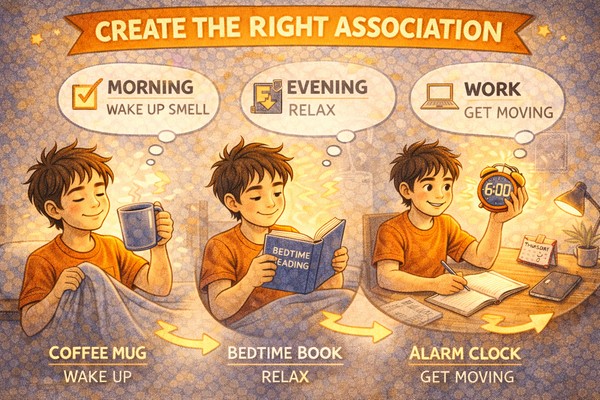
Any trick to make you wake up earlier will fail if you don’t commit to it mentally. And your commitment to wake up early fully depends on what you associate early rising with.
As Anthony Robbins explains in his Personal Power program: every person is driven by two things — the need to avoid pain, and the desire to gain pleasure. If you do something, it’s because you associate pleasure with it. If you avoid something, it’s because of the pain you link to it.
By building strong positive associations with waking up early — and clear negative associations with staying in bed — you can make the habit stick in a way that willpower alone never will.
Create Positive Associations with Early Rising
Start by writing down the benefits and good things you will gain by waking up early. Be specific. What will you do with the extra time? What will it help you achieve? Here are a few examples to get you started:
- I’ll have an extra hour each day to improve my skills and land a better job within a few months
- I’ll exercise for 40 minutes every morning and get back in shape
- I’ll get more done in the morning and have more time for family in the evening
- I’ll earn more respect from my coworkers and boss by arriving earlier — which will help my career
- I’ll feel more self-confident and proud of myself
Write down how early rising will affect your relationships, your self-esteem, your mood, your health, and your finances. Be as specific as possible, and list as many things as you can think of.
One important thing: focus on the results you’ll get, not on the habit itself. Your goal isn’t to wake up an hour earlier. Your goal is everything that waking up earlier makes possible — the opportunities, the free time, the growth. Let that be the thing you’re chasing.
Get Leverage by Creating Negative Associations
Next, write down everything you’ve been missing out on by not having that extra morning time. Again, be specific:
- I haven’t learned the skills I need, so I won’t get a raise this year
- I don’t earn enough to take the vacation I’ve been dreaming about
- I haven’t had time to exercise and I’ve gained weight
- My partner sees me as lazy and it’s affecting our relationship
- I missed a career opportunity because I didn’t have time to learn the language
These should sting a little. That’s the point. Leverage works when the pain of not changing feels real.
Work Both Lists Until They’re Long
Keep adding to both lists until you have at least 30–40 items in each. The more, the better. People doing this exercise often surprise themselves — they uncover motivations they hadn’t consciously recognized before. Take your time. You don’t have to finish in one sitting.
Once the lists are done, read through them a few times a day while you’re establishing your early wake-up routine. This exercise helps you build strong mental associations that keep working in the background — even when you stop thinking about them consciously.
It Works Beyond Waking Up Early
This technique isn’t just for sleep habits. You can apply it to any goal you’re working toward: fitness, learning a skill, building a business, improving a relationship. The mechanics are the same — identify the real gains you want, and make the cost of inaction feel vivid and concrete. That combination is one of the most powerful motivational tools there is.
This tip pairs well with Tip #30: Advertise Your Habit — once you’ve built strong internal associations, making your goal public adds another layer of accountability.
Recommended Reading
- The Neuroscience of Seeking Pleasure and Avoiding Pain — Psychology Today
- The Impact of Perceived Reward on Habit Formation — BMC Psychology
- Making Health Habitual: The Psychology of Habit-Formation — British Journal of General Practice (PMC)